What happens to your bird during cremation, from collection to return
Your bird is logged and tagged, kept chilled, cremated at 1,200 °F or more[1] on a small tray, then cooled, processed and returned, often within 5-10 days[2]. For a small bird the burn itself is brief; most of the wait is scheduling.
By the Avian Cremation Services editorial team · Updated September 24, 2026 · 6 min read · Sources
- Each stage explained in plain words
- What changes when the body is very small
- Realistic timings from pickup to return
The whole journey
What happens to a bird during cremation, in short?
Your bird is collected, given an ID, kept in refrigeration until their slot, then placed in a cremation chamber heated to well over 1,000 °F, usually on a small tray. Soft tissue and feathers are consumed within minutes; what's left is a little bone, which is cooled, refined and sealed in a container for you. Many families have the ashes back in one to two weeks.
Knowing the steps won't make the loss lighter, but it can take away the fear of the unknown. Below, each stage is explained as it usually runs, with notes on where a bird's small size changes things.
How did your bird's death happen?
Tap an answer to vote and see how others answered. Anonymous.
Step 1
What happens when your bird is collected?
A driver picks up your bird from your home or the clinic, or you drop them off yourself. A bird is small enough to travel in a lined shoebox or a soft pouch, and most providers are happy for you to choose the wrapping. That matters to people: in one US survey, 64%[3] of owners said a trash bag was an unacceptable way to transport a pet's body.
At intake, your bird is given a reference number, written on a tag or card that stays with them. The record should note the species, the type of cremation you chose, any items going with your bird and anything to set aside, such as feathers or the leg band. If the provider mentions a metal ID disc, that's the piece that later goes through the chamber alongside your bird.
Step 2
Where does your bird wait before the cremation?
Crematories keep animals in a dedicated refrigerated room until their cycle is scheduled, much as a clinic does. For private cremation that might be the same day or a few days later, depending on how busy the week is. Communal cycles are often batched, so the wait can be longer.
Many owners care about how long this stretch lasts. In a US study, the most common preference, voiced by 26.1%[4] of owners, was for a pet to leave the vet hospital within 24 hours. If a prompt handover matters to you, ask the clinic which day the crematory normally collects.
If your bird is going for a necropsy first, this step looks different. The lab holds your bird, performs the examination, then releases the body to the crematory. That can add several days, and the handover needs a clear instruction that you want the ashes back. The aftercare notes for companion birds explain when a lab or a state veterinarian gets involved.
Step 3
What happens inside the cremation chamber?
A pet cremation unit has a primary chamber, where the body is placed, and a secondary chamber that burns off smoke and gases before anything leaves the stack. In the UK, APHA's rules for animal incinerators set how hot and how long those gases must be held. The primary chamber is lined with heat-resistant brick and runs at 1,200 °F or more[1]; many operators work well above that.
A small bird is rarely laid straight onto the brick. Careful operators use a stainless steel tray or a shallow ceramic dish, so the tiny amount of bone can be lifted out whole rather than swept from a large hearth. Feathers and soft tissue are gone almost immediately. For a finch or budgie the cremation itself is short, often well under an hour, while a macaw or hen takes a little longer.
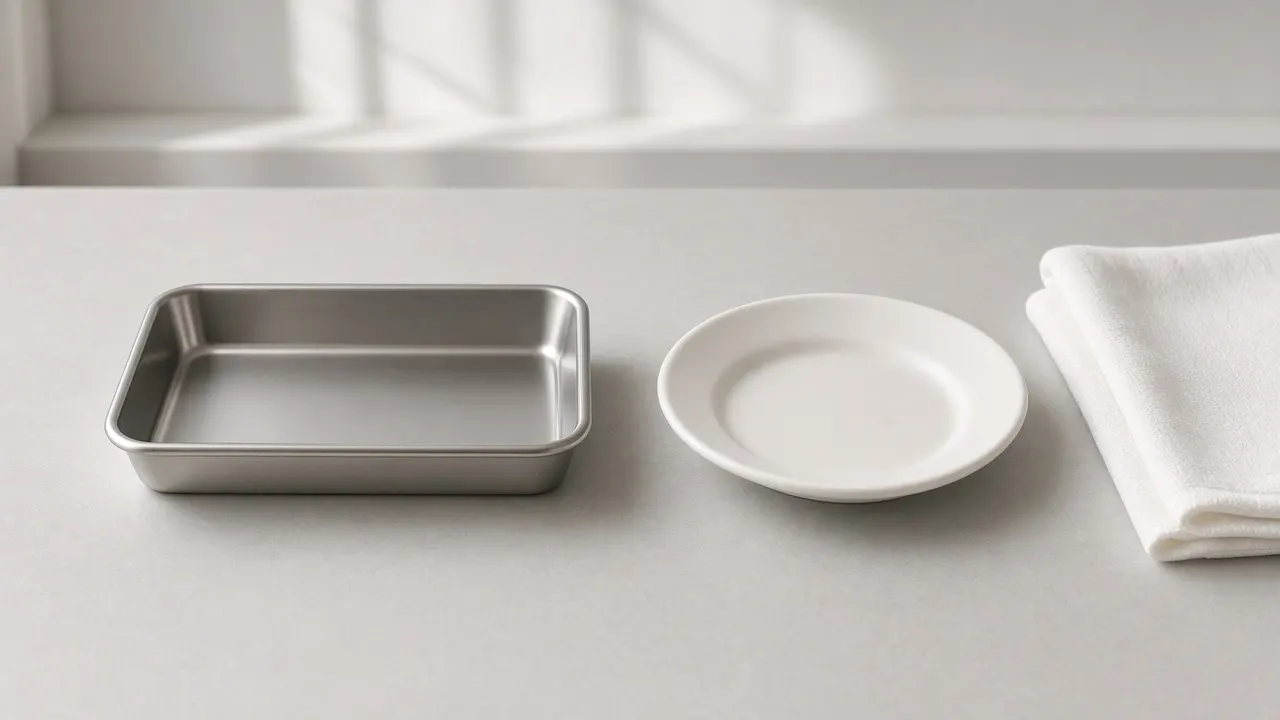
For private cremation, your bird is the only animal in that cycle. For partitioned, several animals share it on separate trays or behind dividers. If you're not sure which you've booked, our comparison of private and communal cremation for birds explains the difference and the paperwork to ask for.
Step 4
What happens during cooling and processing?
Once the cycle ends, the chamber has to cool before anyone can recover the remains safely. With a tray, the operator lifts it out and lets it cool on a bench. What sits there is not fine powder: it's small, pale, brittle fragments of bone, plus the ID disc if one was used.
Those fragments are checked for any metal, such as a missed band or a clip from a toy, and then refined. Larger pets go through a processor that grinds bone into the familiar sandy texture. With only a gram or two from a small bird, some operators refine by hand in a mortar, or return the fragments as they are if you prefer. You're allowed to ask which they do.
Expect a small amount. Cremated remains typically weigh about 3-5% of body weight[5], a pet-industry rule of thumb close to the roughly 3.5% found in a study of 100 human cremations, and birds, with their air-filled bones, often come in at the lower end. The ashes weight estimator gives a range for your species, and the guide to micro-ash return for birds shows what such a small amount looks like.
Step 5
When and how do the ashes come back to you?
Timing depends on the provider's schedule more than on the cremation. A US aftercare guide says 5-10 days[2] is a commonly quoted return time for private cremation. Looking across published times in several countries, our own estimate of a typical window is 3 to 14 days[6], with paid express service faster and busy periods slower.
A small bird's ashes often arrive in a sealed vial, a velvet pouch inside a small tin, or a keepsake urn if you ordered one. A certificate naming your bird, the date and the cremation type usually comes too. You may collect from the clinic, from the crematory, or by tracked courier.

Free tool
Urn size calculator
Find the urn volume you need from your pet's weight, plus keepsake and sharing options.
If you'd like a permanent urn, the urn size calculator will confirm how little space you need, and the post on choosing an urn for a bird covers materials that suit a thimble's worth of ash.
Being part of it
Can you be there, and what can go with your bird?
Some crematories offer a witnessed cremation, where you can say goodbye in a quiet room and be present as your bird is placed in the chamber. It usually adds $25 to $100[7] and needs booking ahead. Others offer a short private viewing instead. Both are optional, and many people feel no need for either.
Small natural items can usually be cremated with your bird: a spray of millet, a folded note, a scrap of cotton from a favorite perch cover, a sprig from the garden. Plastic, acrylic, metal bells and mirrors are removed first. If you want something returned instead, like a favorite toy, say so at collection.
You don't need to watch to be part of it. Choosing what goes with your bird is its own kind of goodbye.
If the loss was sudden, you may be juggling shock and logistics at once. Our page on grief after losing a bird is there when you're ready, and if you'd like us to find a provider who handles small birds with care, send us a few details and we'll reply by email. The services page describes each type of cremation, and our local pages show what's available near you.

Reader polls
What would you choose?
Vote anonymously and see how other readers answered. The results are live counts from people who visit this site, so they show real opinions, not a scientific sample.
How did your bird's death happen?
Tap an answer to vote and see how others answered. Anonymous.
When did you (or will you) decide on aftercare?
Tap an answer to vote and see how others answered. Anonymous.
Where are (or will be) your pet's ashes?
Tap an answer to vote and see how others answered. Anonymous.

Questions people ask
How long does the actual cremation of a bird take?
For a small bird such as a budgie or canary, the time in the chamber is short, often well under an hour, because there's so little body mass. Larger birds like macaws or hens take somewhat longer. Cooling the tray and refining the remains adds more time, and the wait for your slot usually matters more than the cremation itself.
Are feathers left after cremation?
No. Feathers are made of keratin and burn away almost instantly at cremation temperatures, along with the beak's outer layer and the claws. If you want to keep feathers, they need to be collected before your bird is taken for cremation, or you can ask the provider to set a few aside at intake.
Will the ashes look like the ashes from a fireplace?
Not really. Cremated remains are processed bone, so they tend to be pale gray or off-white and slightly gritty, closer to coarse sand than to soft wood ash. From a small bird there may be only a pinch, and some providers return tiny bone fragments rather than grinding them if you ask.
Is my bird alone in the chamber?
Only if you booked a private cremation. In partitioned cremation other animals share the cycle on separate trays, and in communal cremation animals are cremated together with no ashes returned. Ask for the cremation type in writing, along with a certificate, so you know exactly what was done.
Can the crematory collect my bird from a necropsy lab?
Many can, but it needs planning. Tell your vet in writing that you want a private cremation afterward, find out which lab is being used, and give the crematory the lab's name and contact details. Labs often dispose of remains by default unless told otherwise, so make the request before the examination.
What happens to the ID tag and any metal found?
The paper tag or card stays with your bird's record, while a heat-proof metal disc, if used, goes through the chamber and is usually returned with the ashes. Other metal, such as a band or toy clip, is removed during processing. Ask for anything you want back, since some providers discard it.


Sources and our estimates
- [1] Cremation heats bodies to 1,200 °F or more. National Geographic — The environmental toll of cremating the dead (2019), 2019.
- [2] A US aftercare guide says many families receive private cremation ashes within about one to two weeks, with 5-10 days commonly quoted. Funeral.com - Pet Cremation Timelines: How Long Until Ashes Are Returned, 2026.
- [3] 64% of US owners rated a trash bag as an unacceptable container for a deceased pet; 66.1% rated a blanket/shroud acceptable. Cooney, Kogan, Brooks, Ellis - Pet Owners' Expectations for Pet End-of-Life Support and After-Death Body Care, Topics in Companion Animal Medicine (2020), 2020.
- [4] The most common owner preference (26.1%) was for a deceased pet to stay at the vet hospital less than 24 hours before transport to the crematory or cemetery; a further 18.1% said no more than 1-2 days. Cooney, Kogan, Brooks, Ellis - Pet Owners' Expectations for Pet End-of-Life Support and After-Death Body Care, Topics in Companion Animal Medicine (2020), 2020.
- [5] Embrace notes cremated remains typically weigh about 3-5% of the pet's original body weight. Embrace Pet Insurance - Bury or Cremate Your Dog? Costs, Pros & Cons, 2025.
- [6] Published ashes-return times across the network's markets range from same-day (paid express) to about 4 weeks; a conservative typical window is 3-14 days. Our estimate: min/max across sources: Lambeth 3 days; US 5-10 days; RSPCA QLD within 14 days; AniCura Sweden 2-4 weeks. How we calculate.
- [7] Memorials.com's pet cremation cost guide says viewing or witnessing the cremation typically adds $25–$100. Memorials.com – Pet Cremation Cost Guide 2026, 2026.
Arrange a careful cremation for your bird
Tell us what you need and where you are. We'll reply by email with clear options and prices so you can decide in your own time.