Grieving a bird: why the silence is so loud, and what helps
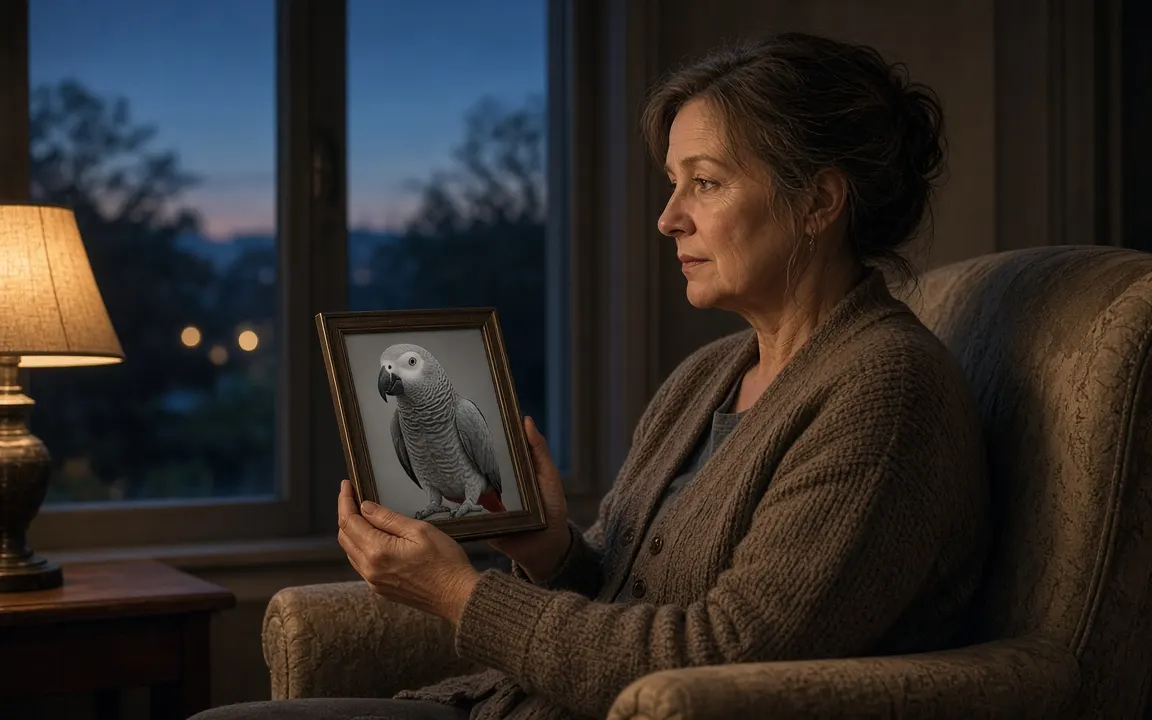
Grief after losing a bird is real grief, and it can be intense. In one large UK survey, 66.9%[1] of bereaved pet owners were surprised by how hard it hit them, and bird keepers often face the extra sting of a sudden death and a suddenly quiet home.
By the Avian Cremation Services editorial team · Updated September 24, 2026 · 6 min read · Sources
- Why bird loss feels different from other pet loss
- Practical steps for the first weeks
- Where to find support that takes it seriously
The short answer
Is it normal to grieve this much for a bird?
Yes. How much you grieve depends on how close you were, not on the size or species of the animal. A study comparing pet and human loss found that closeness was by far the strongest predictor of grief severity[2], and few relationships are as close as the one between a person and a bird who rides on their shoulder all day.
Researchers are also finding that pet loss can be serious. A 2026 UK study in PLOS ONE found 7.5%[3] of people bereaved of a pet met the criteria for prolonged grief disorder, a rate close to that after losing a close friend. That doesn't mean you're unwell if you're struggling. It means the depth of what you feel is well documented. Applied to the US, our estimate is that about 110,000 pet owners a year[4] may go on to meet those criteria after a pet dies. You would be far from alone.
What makes it different
Why does losing a bird feel so different?
Several things about living with birds shape the way their loss lands. Recognising them can make the grief feel less confusing.
- The sound stops. Birds narrate the day: the dawn chatter, the contact call when you leave the room, the whistle when the car pulls in. The silence afterwards is constant and hard to escape.
- The death is often sudden. Birds hide illness until they can't, so many owners go from a normal evening to a bird on the cage floor with no warning in between.
- Guilt about missed signs. Looking back, a fluffed posture or a quieter day can seem obvious. At the time, it almost never was.
- Length of the bond. A parrot may have been with you through a marriage, a divorce, several homes and the children growing up.
- Other people shrink it. Among bereaved owners in one UK survey, 34.5%[5] were told it was just a pet. Bird keepers hear the small-animal version of that remark a lot.
What was the hardest part of losing your pet?
Tap an answer to vote and see how others answered. Anonymous.
If you're blaming yourself
Could you have seen it coming?
This is the question bird owners ask most often, usually in the middle of the night. The honest answer is that birds are wired to hide weakness, because in the wild a bird that looks sick is the one a hawk picks out. By the time symptoms are visible, illness is often advanced, even for keepers who watch closely.
If you need facts to quiet the what-ifs, a necropsy can sometimes explain what happened, though it has to be arranged before cremation. Some owners find an answer settles their mind; others decide they don't need one. Either choice is fine. Our companion bird aftercare guide covers the options if you haven't decided yet.
Getting through it
What helps in the first few weeks?
Grief after a pet disrupts ordinary life more than people expect. In the RSPCA's survey, 72.6%[7] said they lost their daily routine or sense of purpose, and many had trouble sleeping or concentrating. With a bird, the routine is tightly structured: covering the cage at night, chopping vegetables in the morning, the time out of the cage together. When all of that stops, the day has holes in it.
- Decide what to do with the cage, slowly. Some people clean and store it straight away; others need it in place for a few weeks. Neither is a sign of coping better or worse.
- Fill one routine on purpose. If mornings were feeding time, use that slot for a short walk or a coffee by the window.
- Save the sounds. Collect any videos with your bird's voice before phones and cloud accounts get tidied up. Hearing them may be hard now and precious later.
- Say goodbye in some small way. A few words at the burial spot, lighting a candle when the ashes come home, or writing a letter to put in with the cremation.
- Tell people plainly. A short message that you've lost your bird and you're finding it hard saves you from explaining over and over.

What helped you most in the first weeks?
Tap an answer to vote and see how others answered. Anonymous.
Long lives
What if your parrot was with you for decades?
Large parrots can share a very long stretch of a person's life. Blue-and-gold macaws have a median captive life expectancy of about 21 years[8], and some birds live well beyond that. Losing a parrot after twenty or thirty years can feel like losing a whole era: the bird was a link to the home you grew up in, a parent who first owned them, or a partner who is no longer around.
If your parrot was inherited, the grief may carry an earlier loss inside it. That's worth saying out loud to someone. It's also common to feel a strange mix of sadness and relief if a long-lived bird had a slow decline at the end. Relief doesn't cancel love; it usually reflects how hard the last months were.
A bird that has lived half your life with you leaves a hole the shape of every room you shared.
Support
Where can you find support that understands?
More than half of bereaved owners in the RSPCA's pet bereavement survey (56.7%[6]) couldn't find the support they needed. It's worth knowing what exists before you need it. In the US, Cornell's Pet Loss Support Hotline is free[9] and staffed by veterinary students trained by grief counselors. Many vet schools and humane societies run similar lines or monthly support groups.
- Bird clubs and online parrot communities. Other keepers understand the specific loss, including the sounds, the flock dynamics and the sudden death.
- Your avian vet's practice. Many can point to local grief groups or counselors who work with pet loss.
- A counselor or your doctor, if grief is stopping you from working, sleeping or eating for weeks, or if you're having thoughts of harming yourself.
Research on pet loss suggests grief often lasts longer than people expect: nearly one in three owners in a US study[10] grieved for at least six months. If you're still sad months later, you're in good company, not behind.
The household
How do you help children and other birds through it?
Children usually cope better with plain words than with gentle stories. Say the bird died and won't come back, avoid phrases like went to sleep, and let them help with something concrete, such as choosing a feather to keep or painting a stone for the garden. Our memorial ideas for birds include several that work well with children.
If your bird had a cage mate, the surviving bird may call, search or go quiet. That needs its own attention, and a vet check if they stop eating. Our guide to caring for flockmates after a loss covers what to watch for. When you feel ready to think about aftercare, the services page explains the options gently, our local pages cover what's near you, and memorial ideas for bird owners has small, doable ways to mark the loss.
Looking ahead
When is it okay to get another bird?
There's no correct waiting period. Some households add a new bird within weeks, often because a surviving bird is lonely. Others wait years or decide not to. A new bird isn't a replacement, and it's fine if the first weeks with them feel bittersweet.
If a parrot is still with you and getting older, making a plan now is one of the kindest things you can do for both of you. The pet age calculator shows where your bird is in their life, and our planning page covers the practical decisions. When the time comes to arrange aftercare, send us your details and we'll do the phoning around for you.
Free tool
Pet age & senior years calculator
Convert your pet's age and see when senior-care and planning conversations usually start.

Reader polls
What would you choose?
Vote anonymously and see how other readers answered. The results are live counts from people who visit this site, so they show real opinions, not a scientific sample.
How did your bird's death happen?
Tap an answer to vote and see how others answered. Anonymous.
What was the hardest part of losing your pet?
Tap an answer to vote and see how others answered. Anonymous.
What helped you most in the first weeks?
Tap an answer to vote and see how others answered. Anonymous.


Questions people ask
Is it silly to be this upset about a budgie?
Not at all. Grief follows attachment, not body weight. A budgie that greeted you every morning and sat on your shoulder while you worked was part of your daily life, and losing that hurts. Many owners are surprised by how strong the feeling is, which is one reason it helps to talk to people who keep birds too.
How long does grief after losing a bird last?
It varies widely. The sharpest pain often eases over weeks, but waves of sadness can return for months, especially at routine moments like morning feeding. A US study found nearly one in three pet owners grieved for at least six months. If grief stops you functioning for a long period, speak to a doctor or counselor.
Should I keep my bird's cage after they die?
Only if you want to. Some owners store it for a future bird, some donate it to a rescue, and some keep a perch or toy as a memorial. If the cause of death is unknown or might be infectious, clean and disinfect it thoroughly before reusing it or passing it on, and ask your avian vet for advice.
Why do I feel so guilty after my bird died suddenly?
Sudden deaths leave no time to prepare, so the mind replays every detail looking for a reason. Birds hide illness very well, and experienced keepers and vets are often caught out too. If you want answers, ask your vet about possible causes or a necropsy. If not, try to treat yourself as you would a friend in the same position.
Can I take time off work after my pet bird dies?
It depends on your employer. Paid pet bereavement leave is still uncommon: one US survey found only 11%[11] of employers offer it. Many people use a personal or vacation day. It's reasonable to tell your manager plainly that a long-time companion animal has died and you need a day.
What can I do with my bird's voice recordings?
Gather every clip from phones, old laptops and shared albums into one folder and back it up. Some families edit a short compilation, add the audio to a photo slideshow, or turn a favorite whistle into a sound wave print. Even if listening hurts right now, having them safe means you can choose later.


Sources and our estimates
- [1] 66.9% of respondents were surprised by how intense their grief was after losing a pet. RSPCA — Pet Loss Survey Results, 2026.
- [2] A Death Studies paper comparing pet and human loss found closeness to the deceased was overwhelmingly the strongest predictor of grief severity, whatever the species. Europe PMC abstract — Eckerd, Barnett & Jett-Dias, 'Grief following pet and human loss: Closeness is key', Death Studies (2016), doi:10.1080/07481187.2016.1139014, 2016.
- [3] 7.5% of UK adults whose bereavement was the death of a pet met criteria for prolonged grief disorder (PGD). Hyland et al., 'No pets allowed: Evidence that prolonged grief disorder can occur following the death of a pet', PLOS ONE (2026), 2026.
- [4] Each year about 110,000 U.S. pet owners may go on to meet prolonged grief disorder criteria after a pet dies. Our estimate: 1.5M pet cremations (proxy for pet deaths with an engaged owner) x 7.5% PGD rate. How we calculate.
- [5] 34.5% of bereaved pet owners were told 'it's just a pet'. RSPCA — Pet Loss Survey Results, 2026.
- [6] 56.7% of bereaved pet owners in the RSPCA survey could not find the support they needed. RSPCA — Pet Loss Survey Results, 2026.
- [7] After losing a pet, 72.6% lost their daily routine or sense of purpose, 69.8% had trouble concentrating and 65.9% had sleep problems. RSPCA — Pet Loss Survey Results, 2026.
- [8] Blue-and-gold macaws have a median captive life expectancy of 21 years (record 49); galahs 13 years (record 73) and blue-fronted Amazons 20 years. Association of Avian Veterinarians - Care for Senior Parrots (client handout), Table 1.
- [9] Cornell's free Pet Loss Support Hotline (607-218-7457) is staffed by veterinary students trained by professional grief counselors. Cornell University College of Veterinary Medicine, 2026.
- [10] A 2009 Bulletin of the Menninger Clinic study of 106 pet owners found nearly 1 in 3 grieved for at least six months. SHRM — Grieving a Pet's Death: Should Workers Get Time Off? (2016), 2009.
- [11] Only 11% of employers offer paid pet loss leave, according to an AbsenceSoft survey. AbsenceSoft — Understanding Pet Bereavement Leave and Its Importance to Today's Workforce, 2025.
Let us handle the aftercare questions
Tell us what you need and where you are. We'll reply by email with clear options and prices so you can decide in your own time.