How much ash comes back from a small bird, and how it reaches you
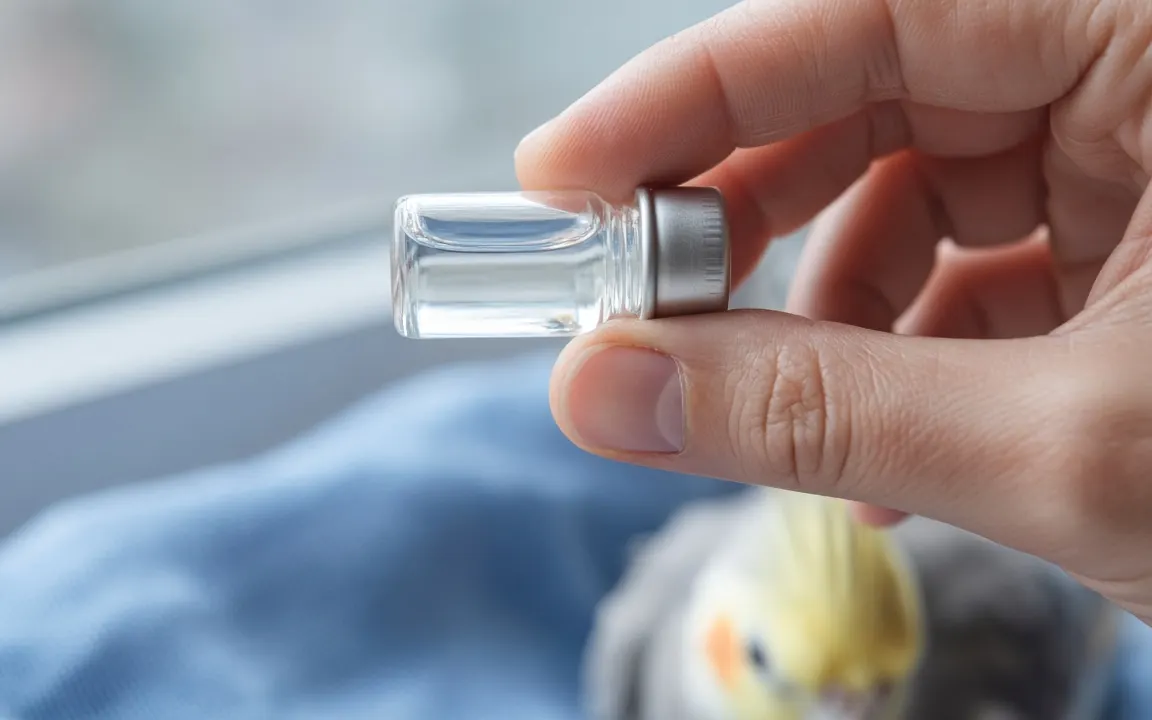
Cremated remains usually weigh about 3-5% of body weight[1], and birds often land at the low end because their bones are thin and partly hollow. A 35 g budgie may return around a gram, roughly a quarter teaspoon, usually in a sealed vial or small pouch rather than a full urn.
By the Avian Cremation Services editorial team · Updated September 24, 2026 · 5 min read · Sources
- Realistic ash amounts by species
- What container to expect, and why
- How to check the ash is your bird's
The short answer
What does micro-ash return actually mean?
Micro-ash return is a term some providers use when an animal is so small that its remains are measured in grams or fractions of a gram. For a finch or canary, that means a light dusting of pale grit; for a budgie, about enough to cover a fingernail; for a cockatiel, closer to a level half-teaspoon. It arrives in a small sealed container sized to match, not an empty-looking urn.
Knowing this in advance changes how the moment feels when the package arrives. A tiny amount doesn't mean something went wrong. It means a very light creature was cremated carefully enough that anything was recovered at all.
Why do birds leave so little behind?
What comes back from any cremation is bone mineral; everything else burns away. Birds are built for flight, and many of their bones are pneumatized, meaning hollow and connected to the air sacs. That keeps them light, and it means a smaller share of body weight is left as ash than in a dog or cat of the same size.
The rule of thumb pet crematories use sits close to human research: a study of 100 human cremations found remains averaged about 3.5%[2] of body weight in adults. Pet guidance, such as one pet insurer's, gives a band of 3 to 5%. For birds, treat the lower end as the more likely outcome, and don't be surprised by a little less.
| Bird | Typical weight | Estimated ash | Rough volume |
|---|---|---|---|
| Zebra finch | 12 g | 0.4 to 0.6 g | Under 1/8 teaspoon |
| Canary | 25 g | 0.75 to 1.25 g | About 1/6 to 1/4 teaspoon |
| Budgie | 35 g | 1 to 1.75 g | About 1/4 to 1/3 teaspoon |
| Cockatiel | 90 g | 2.7 to 4.5 g | About 1/2 to 1 teaspoon |
| African grey | 450 g | 13.5 to 22.5 g | About 3 to 4.5 teaspoons |
| Macaw | 1 kg | 30 to 50 g | About 2 to 3 tablespoons |
Volumes assume roughly 1 gram per milliliter and 5 ml per teaspoon, so read them as ballpark figures. For your own bird's weight, the ashes weight estimator does the math in grams and ounces.
Free tool
Ashes weight estimator
See roughly how much ash to expect back, by species and body weight.
How do providers recover such small remains?
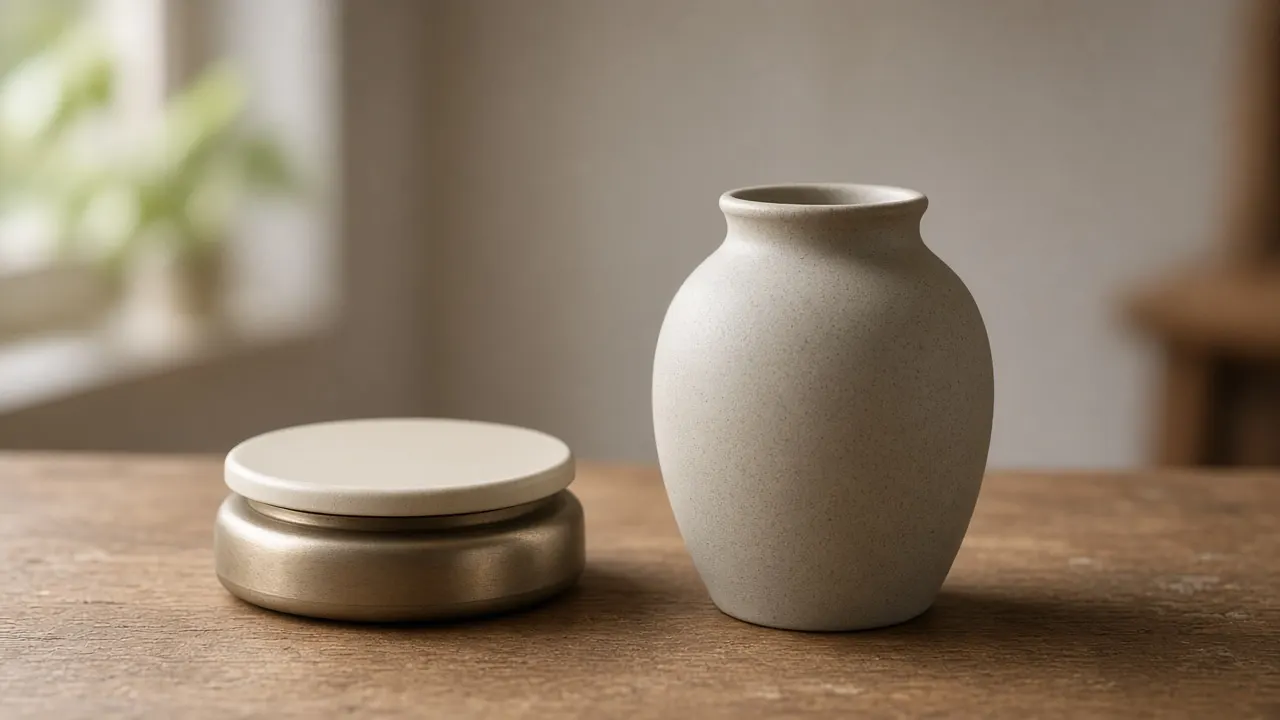
In a standard chamber, a budgie laid on the hearth floor could be lost among the fine residue left from earlier cremations. Careful providers avoid that by placing small birds on a stainless steel tray or in a ceramic or steel dish, which is lifted out whole once it cools. Our article on what happens during a bird cremation walks through the full cycle.
- Tray or dish. Your bird goes in on its own tray, with an ID tag alongside.
- Cooling. The tray is removed and left to cool so nothing blows away.
- Hand collection. The operator sweeps the remains together with a fine brush, often over a clean sheet of paper.
- Processing. Larger birds' fragments go through a processor to make a uniform powder. For very small birds, some providers crush the fragments gently by hand instead, because a machine can hold on to a meaningful share of a single gram.
- Sealing. The remains are tipped into the container and sealed with the ID tag or certificate.
Ask whether the cremation is truly private or partitioned before you book; our guide to private vs communal cremation for birds explains the difference. With a gram of ash at stake, the answer matters more than it does for a large dog.
What container will your bird's ashes arrive in?
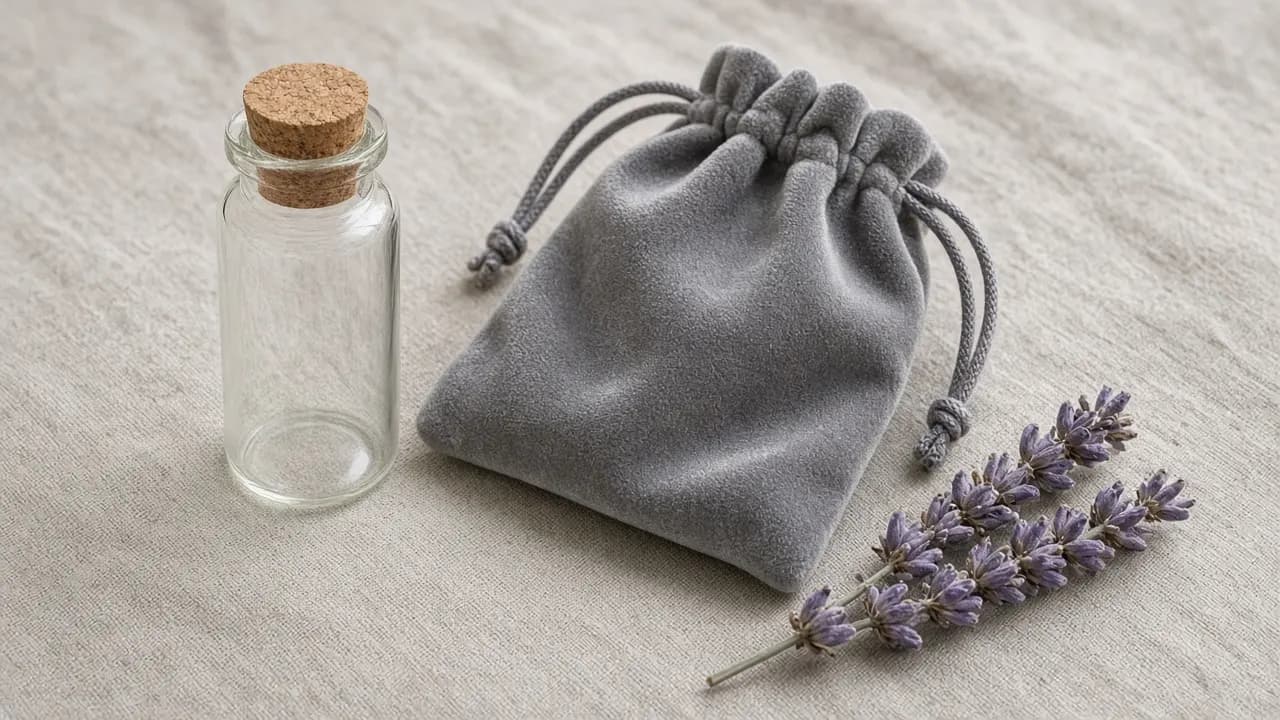
- Sealed glass or plastic vial. The most common choice for finches, canaries and budgies. Easy to see into, which some people find reassuring and others don't.
- Velvet or satin pouch. Usually holds a small sealed bag inside. Soft to hold and easy to place in a memory box or shadowbox.
- Sealed tube or capsule. A metal or wooden tube with a screw cap, sometimes with an engraved nameplate.
- Keepsake urn. A tiny urn, often 1 to 3 cubic inches. Usually the default for cockatiels and larger parrots, and simple ones cost about $15–$60[3].
If you already have a container in mind, tell the provider before cremation so they can transfer the remains straight into it. The urn size calculator tells you what capacity to look for, and urn sizing for birds covers materials that suit very small volumes.
How can you be sure the ashes are your bird's?
The honest answer: you rely on the provider's process and paperwork, because ash can't be tested for identity. Good providers make that process visible. By one directory's count, only 2 states[4] in the US, Illinois and Arizona, required written documentation for pet cremation as of April 2026, so ask for it wherever you live.
- A numbered stainless steel or ceramic ID tag that stays with your bird from intake to the sealed container
- A certificate of cremation naming your bird, the date and whether it was private or partitioned
- Written confirmation that small birds are cremated on their own tray
- An option to witness the cremation, which some providers offer for a fee
More good questions are collected in our list of questions to ask a bird cremation provider. Certification is another signal: the Cremation Association of North America runs a pet crematory operator certification, so ask whether the person running the chamber holds it.
What will a small bird's ash fit into?
Less than you might hope, but more than nothing. A cremation pendant holds only a pinch[5], far less than a teaspoon for most designs. Ashes-in-glass pieces use only 1/8–1/2 tsp[6], so a budgie's quarter teaspoon can go into a glass charm or be split between a pendant and a vial.
A finch's fraction of a gram usually stays in its sealed vial, or goes whole into a single glass piece if the maker accepts very small amounts. Ask the maker how much they need and whether unused ash is returned, and allow 2–8 weeks[7] for glass work. Browse bird keepsakes and ash jewelry for ideas that work at this scale.
If a small bird returns only a pinch of ash, would you still choose private cremation?
Tap an answer to vote and see how others answered. Anonymous.
What if almost nothing visible comes back?
With the smallest finches, the container can look empty at first glance. Tilt it toward a light and you'll usually see a fine gray or white film. That is your bird. If you truly see nothing, call the provider and ask them to walk you through what was recovered; a straightforward provider won't mind.
If this worries you, you have options before you book. Many keepers of very small birds choose communal cremation or burial and keep feathers instead; our feather shadowbox guide shows how. Others go ahead with private cremation because even a trace matters to them. Both are reasonable. Private remains usually come back within about 3 to 14 days[8].
The size of what comes home has nothing to do with the size of the bird's place in your life.
Want a provider who handles birds this small routinely? Tell us where you are and we'll email options near you. The services page explains what private, partitioned and communal cremation return, and our local pages cover prices and pickup where you live.

Reader polls
What would you choose?
Vote anonymously and see how other readers answered. The results are live counts from people who visit this site, so they show real opinions, not a scientific sample.
If a small bird returns only a pinch of ash, would you still choose private cremation?
Tap an answer to vote and see how others answered. Anonymous.
What surprised you most about the cost of pet aftercare?
Tap an answer to vote and see how others answered. Anonymous.
Where are (or will be) your pet's ashes?
Tap an answer to vote and see how others answered. Anonymous.

Questions people ask
Will I get any ashes back from a finch?
Usually a little, if the provider uses a tray or dish and collects by hand. Expect well under a gram, often a faint film of powder in a vial. Some providers are candid that the amount is barely visible and may suggest communal cremation plus feathers as an alternative. Ask what they typically return for a bird that size before you book.
Why are my bird's ashes white or gray instead of black?
Cremation burns away all organic material, leaving calcium phosphate from the bones. That mineral is naturally pale, from bright white to light gray, sometimes with faint tints from trace minerals. Black material would suggest incomplete cremation, which is rare. Color differences between birds are normal and don't mean anything was mixed.
Can two birds' micro-ashes be combined?
Yes. Many keepers of bonded pairs ask for the ashes to be placed together, either at the time of the second bird's cremation or later at home. If both birds are cremated at once, ask for a shared private cremation and a note on the certificate. Combining later is simple: open both vials over a sheet of paper and tip one gently into the other.
Is the ash from a bird safe to keep at home?
Yes. Cremation at high temperature leaves sterile mineral, so there's no infection risk from the ashes themselves, even if your bird was ill. The powder is alkaline, so avoid spilling it on plants or fabric you care about, and keep the container sealed so tiny amounts don't drift away when opened.
How long does it take to get a bird's ashes back?
Many providers return private remains in about one to two weeks, though some are faster and a necropsy adds time. Small birds don't necessarily come back sooner, since providers often schedule them alongside other small pets. Ask for an expected return date and whether you'll collect or receive them by courier.
Should I choose partitioned cremation for a small bird?
Partitioned cremation costs less, but with such small remains even a few stray grains from a neighbor's section make up a bigger share of what you receive. If having only your bird's ash matters to you, pay for private. If it doesn't, communal plus feathers is often a clearer choice than partitioned.
Keep reading

Ash and urn calculators
Estimate ash weight and urn size from your bird's weight.

Bird cremation services
Private, partitioned and communal options for small birds and parrots.

More bird guides
Aftercare options, feather keepsakes and caring for a surviving bird.

Bird aftercare near you
How providers, prices and rules differ by area.
Sources and our estimates
- [1] Embrace notes cremated remains typically weigh about 3-5% of the pet's original body weight. Embrace Pet Insurance - Bury or Cremate Your Dog? Costs, Pros & Cons, 2025.
- [2] In a study of 100 commercial human cremations, cremated remains averaged about 3.5% of total body weight in adults, 2.5% in children and about 1% in fetuses; this is the benchmark most pet crematories adapt for animals. Warren MW, Maples WR. The anthropometry of contemporary commercial cremation. Journal of Forensic Sciences, 1997 (PMID 9144931), 1997.
- [3] Keepsake or mini pet urns cost about $15–$60, versus $25–$100 for small and $40–$200 for medium urns (Memorials.com). Memorials.com – Pet Urn Cost Guide, 2025.
- [4] As of April 2026 only Illinois and Arizona mandated written documentation to consumers for pet cremation. FindPetCremations - Pet Cremation Laws & Regulations by State (2026), 2026.
- [5] An ashes pendant holds only a pinch of cremated remains (the retailer says at most about a teaspoon; most pendants hold far less), and most come with a small funnel fill kit. Memorials.com – Pet ashes necklaces, 2026.
- [6] Ashes-in-glass pet memorials use only about 1/8 to 1/2 teaspoon of ashes. Funeral.com – Ashes in Glass for Pets, 2026.
- [7] Ashes-in-glass studios typically ship pieces 2–8 weeks after receiving the ashes. Funeral.com – Ashes in Glass for Pets, 2026.
- [8] Published ashes-return times across the network's markets range from same-day (paid express) to about 4 weeks; a conservative typical window is 3-14 days. Our estimate: min/max across sources: Lambeth 3 days; US 5-10 days; RSPCA QLD within 14 days; AniCura Sweden 2-4 weeks. How we calculate.
Find a provider set up for tiny birds
Tell us what you need and where you are. We'll reply by email with clear options and prices so you can decide in your own time.