When your bird dies in Sedona: aftercare options
A bird's body is small, but the loss isn't. Here's what private and communal cremation mean for birds in Sedona, what they usually cost and how to find a provider who handles tiny remains with care.
- Advice for flockmates left behind
- Bird flu questions pointed to the right office
- Keepsake ideas that suit birds
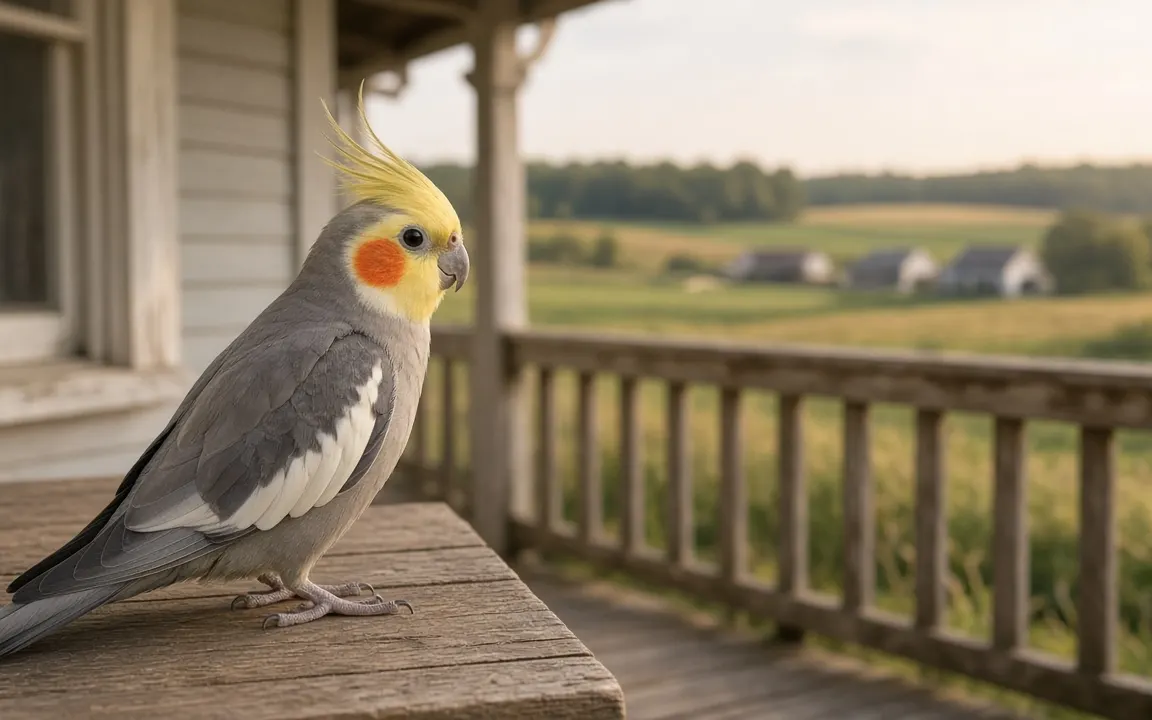
Sedona, Arizona
Who helps with a pet bird's aftercare around Sedona
Sedona sits among red rock buttes at about 4,300 feet, straddling Yavapai and Coconino counties, roughly 30 miles below Flagstaff by way of Oak Creek Canyon and a shorter drive from Cottonwood in the Verde Valley. It's a small town of retirees, workers and a heavy flow of visitors. Sedona's own clinics handle a lot, but some aftercare may mean a trip to Cottonwood or up the canyon to Flagstaff.
Sedona has hot summers, usually in the mid-90s, mild winters with the occasional dusting of snow on the red rocks, and a monsoon from July into September that can send water racing down the washes. Wildfire risk is real in dry years, especially in Oak Creek Canyon. During a summer heat wave, a pet's body shouldn't wait long; a cool room and an early call to a vet help.
In a town like Sedona, your vet probably knows the crematory staff by name, so ask them plainly: do they cremate birds often, do they use a tray for small bodies and what comes back? A straight answer from someone local is worth a lot. If the answers are vague or the only option is communal, we can look further afield for you.
Sedona's population is around 9,619, the 29th-largest of the 29 Arizona communities we cover.
For a second opinion on price, Flagstaff (24 miles, a larger centre), Prescott Valley (37 miles, a larger centre) and Prescott (43 miles, a larger centre) are close enough that their providers cover Sedona routinely. Two written quotes tell you more than any price list.
80.7%[1]
The NFDA projected Arizona's cremation rate at 80.7% for 2024.
6 million[2]
About 6 million US households keep pet birds.
1.4 million[3]
There are about 1.4 million indoor pet birds in the UK (2.7% of households).
3-5% of body weight[4]
Embrace notes cremated remains typically weigh about 3-5% of the pet's original body weight.
To check the figures yourself, see Embrace Pet Insurance and UK Pet Food (formerly PFMA) Pet Population 2026.
How Arizona thinks about cremation
Cremation is the everyday choice in Arizona: about 80.7%[1] of people there are cremated. That familiarity carries into pet aftercare. Crematories are well established, private cremation is widely understood and nobody will find it odd that you want the remains of a budgie who weighed less than a letter. What's less common is hands-on experience with birds, so ask each provider how they handle very small bodies.
NFDA 2024 Cremation & Burial Report state projections (via Occasional Sage) (2024) is where the Arizona figure comes from. It counts people; we use it because attitudes to cremating a pet in Sedona tend to follow attitudes to cremation generally.
Sedona weather, birds and timing
In Sedona's cold months, a garage or unheated shed can seem like a natural fridge, but temperatures swing and pests find their way in. For a bird, the kitchen refrigerator or a freezer is safer. If you're storing your bird outside for lack of space, use a sealed plastic box and check it daily until collection.
Backyard hens around Sedona get through 7 freezing months with a dry, draft-free coop. If one dies in winter, the ground may be too hard to dig. Many keepers wrap the bird and keep her in a freezer until the thaw, or choose cremation instead. Either is fine for a hen who died of old age; after sudden deaths, call a vet first.

Why cremating a small bird costs what it does
Standard US pet insurance typically doesn't cover cremation[5], and few bird owners carry a policy anyway, so plan to pay directly. If you'd like to be present, some crematories charge a viewing fee; posted surcharges run from $25 to $350[6]. For a bird, a short private goodbye at the clinic is usually free.
Prices for Sedona track the wider Arizona market, so use the Arizona price table as your baseline and the services page to see what is included.

Free tool
Cremation cost calculator
Estimate a realistic price range for your pet's size, location and the type of cremation.
What the law says about a pet bird in Arizona
If your bird was a protected or licensed species, such as some native parrots, there may be paperwork to close after a death. For ordinary pet species, the rules in Arizona are mostly about where remains may go. Here's a short summary, with links to the official detail.
Not sure which office covers Sedona? The Arizona local government directory is the official list.
For Arizona's rules on burying a pet at home or scattering ashes, see the Arizona guide. Local rules in Sedona can be stricter than the state's, especially in homeowners' associations and rentals.
The first day, step by step
- Tell your child simply and truthfully. Use the word "died" rather than softer phrases such as "went to sleep", which can confuse young children.
- Let them see the bird if they want to, wrapped in a soft cloth. Many children find it helps; don't insist if they don't.
- Give them a job: choosing a feather to keep, drawing a picture, or picking where the container will sit.
- Keep your bird refrigerated while the family decides between a small burial and cremation.
- Explain what cremation means in plain words: the body is turned into a small amount of soft ash that comes home.
- Wait before replacing the bird. Give your child time to miss them, and involve them in deciding if and when.
Remembering your bird in Sedona
Cathedral Rock, Bell Rock and the trails of the Coconino National Forest are the backdrop to many Sedona pets' lives, and Oak Creek's shaded banks are a summer favorite. Families often picture those spots when they talk about ashes. Much of the land around Sedona is national forest or state park; check the rules before scattering, and avoid busy trailheads and the creek itself.
Our services overview lays out every option side by side, the planning tools turn your pet's details into figures, or compare your instinct with the poll results, the guides answer the longer questions and the blog the newer ones. If you live between Sedona and Tucson, Glendale, Chandler and Gilbert, either page applies. Every other community in Arizona, and all of the United States, is listed too.

Reader polls
What would you choose?
Vote anonymously and see how other readers answered. The results are live counts from people who visit this site, so they show real opinions, not a scientific sample.
Did you keep (or would you keep) any of your bird's feathers?
Tap an answer to vote and see how others answered. Anonymous.
Would you want a necropsy to find out why your bird died?
Tap an answer to vote and see how others answered. Anonymous.
If you had to decide today, which aftercare would you choose for your pet?
Tap an answer to vote and see how others answered. Anonymous.

Free tools to help you plan
Cremation cost calculator
Estimate a realistic price range for your pet's size, location and the type of cremation.

Ashes weight estimator
See roughly how much ash to expect back, by species and body weight.

Pet age & senior years calculator
Convert your pet's age and see when senior-care and planning conversations usually start.
Questions people ask
How do Arizona attitudes to cremation compare?
NFDA 2024 Cremation & Burial Report state projections (via Occasional Sage) (2024) puts the Arizona human cremation rate at about 80.7%[1]. We show it on the Sedona page because pet aftercare choices tend to track it: where cremation is normal for people, communal and private pet cremation are both easy to find.
When is the hardest time of year to arrange a burial in Sedona?
January, February, March, April, October, November and December: average lows are below freezing then, and frozen ground makes a home grave slow or impossible until it thaws. The other pressure point is July, when highs around 82°F mean a body needs cooling and collecting quickly.
Which nearby towns can I compare with Sedona?
The closest communities we cover are Flagstaff (about 24 miles), Prescott Valley (about 37 miles) and Prescott (about 43 miles). Providers based in those places often serve Sedona too. Ask each one for a written total that includes collection, so the distance is priced in.
Should I refrigerate or freeze my bird before cremation?
If there's any chance you'll want a necropsy, refrigerate your bird, because freezing damages the tissue a pathologist needs to examine. If you're sure you don't want one, freezing is fine and gives you as much time as you need. Either way, wrap your bird in a paper towel and seal them in a bag.
Can I bury my bird in my garden in Arizona?
In most places, yes, if you own the property, dig deep enough to keep scavengers away and stay clear of wells and waterways. Renters usually need permission, and some towns have their own rules. Don't bury a bird suspected of an infectious disease until your vet agrees.
Can my bird be cremated with a favorite toy or perch?
Usually not. Metal, plastic and treated wood can damage equipment or add residue to the remains, so crematories normally remove them. A small piece of untreated wood or paper may be allowed; ask first. Most families keep the toy instead and display it beside the container, which gives them more to hold.


Sources and our estimates
- [1] The NFDA projected Arizona's cremation rate at 80.7% for 2024. NFDA 2024 Cremation & Burial Report state projections (via Occasional Sage), 2024.
- [2] About 6 million US households keep pet birds. American Pet Products Association (APPA) 2025 National Pet Owners Survey release, 2025.
- [3] There are about 1.4 million indoor pet birds in the UK (2.7% of households). UK Pet Food (formerly PFMA) Pet Population 2026, 2026.
- [4] Embrace notes cremated remains typically weigh about 3-5% of the pet's original body weight. Embrace Pet Insurance - Bury or Cremate Your Dog? Costs, Pros & Cons, 2025.
- [5] Embrace says standard pet insurance typically does not cover cremation, while euthanasia can be covered if medically necessary for a covered condition; cremation is an eligible expense under its optional Wellness Rewards. Embrace Pet Insurance - Bury or Cremate Your Dog? Costs, Pros & Cons, 2025.
- [6] Posted surcharges to witness or view a pet cremation range from $25 to $350, with a median of about $125 across four data points. Our estimate: median of [$25 guide low, $100 guide high, $150 NC provider, $350 VA provider]. How we calculate.
- [7] Published ashes-return times across the network's markets range from same-day (paid express) to about 4 weeks; a conservative typical window is 3-14 days. Our estimate: min/max across sources: Lambeth 3 days; US 5-10 days; RSPCA QLD within 14 days; AniCura Sweden 2-4 weeks. How we calculate.
Find a provider for your bird near Sedona
Tell us what you need and where you are. We'll reply by email with clear options and prices so you can decide in your own time.